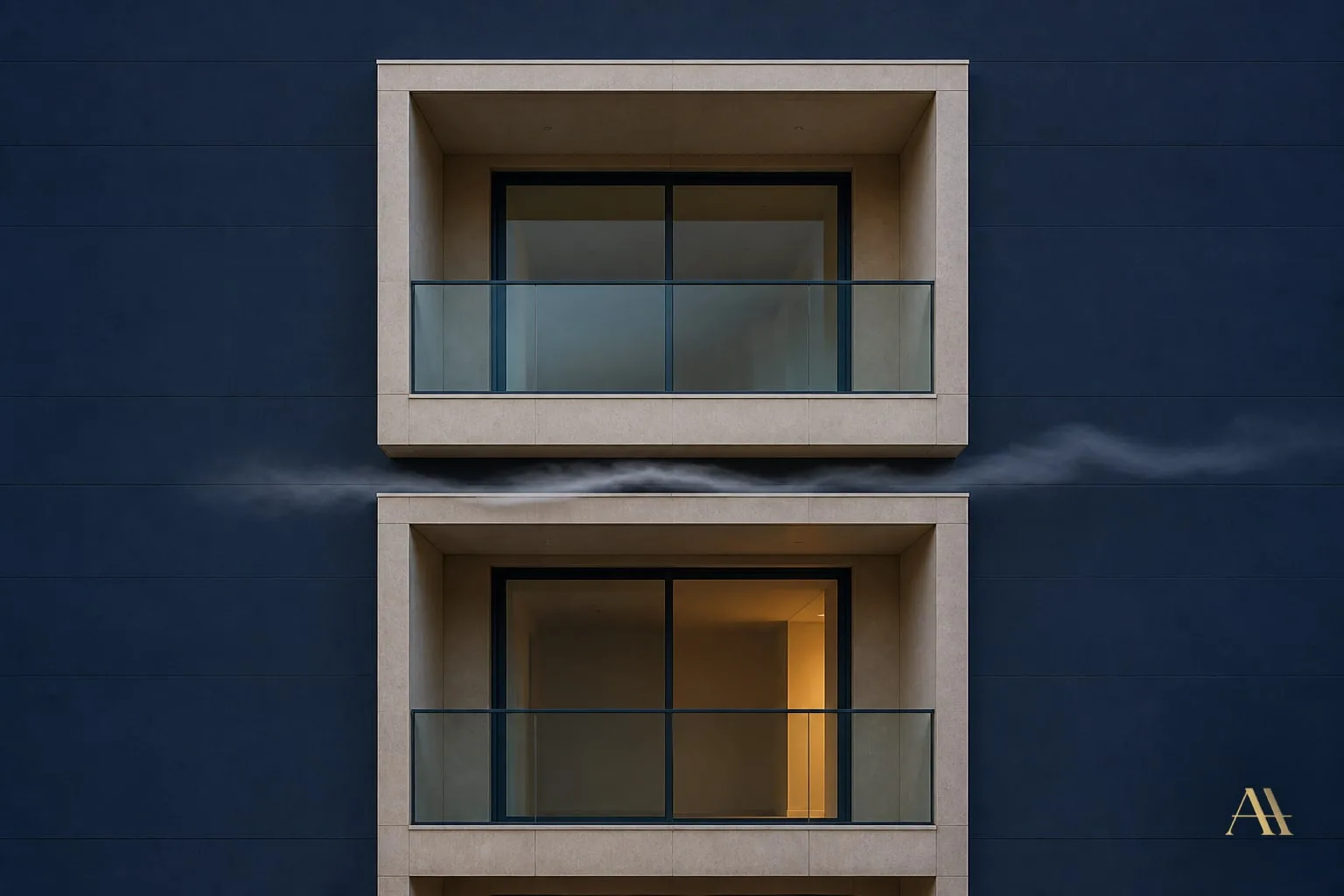
Smoking on a balcony in a condominium is one of the most common problems between residents living in a shared building. Many frequently encounter a neighbor smoking on an adjacent balcony, as well as cigarette butts...
On the one hand, Yaakov argues that it is his legitimate right to do as he pleases in his own home, and that there is no law prohibiting otherwise. On the other hand, Yitzhak, who is harmed by the smoking, argues that the smoke penetrates his home, disturbs his peace, and that he is unable to defend himself against the nuisance.
Before we dive into the wording of the legislation as detailed below, we would preface by noting that there is a worldwide trend toward eradicating the phenomenon of smoking, out of a strong desire to reduce the percentage of smokers among the public, through advanced legislation reflected in widespread publicity and in bringing information about the dangers of smoking to the general public, extending even to the imposition of a sweeping ban.
The Dangers of Smoking
Studies and articles on smoking are published daily regarding its destructive impact and its contribution to the human mortality rate. It should also be noted that the International No Smoking Day was recently observed around the world. Space does not permit a detailed review of the subject, but for illustration, we will present a small portion of the information published to the general public by the Ministry of Health pursuant to the Duty to Report on the Health Damage Caused by Smoking Tobacco Products Law, 5761-2000. A review of the report reveals:
“Smoking is one of the main causes of morbidity and mortality in Israel. It is estimated that in 2016, approximately 8,000 Israelis died as a result of illness caused by smoking, of whom approximately 800 died as a result of illness caused by exposure to secondhand smoke…”
“The Ministry of Health is currently formulating a comprehensive plan to reduce smoking and its harms, which will include improving protection against exposure to secondhand smoke in public places and expanding restrictions on smoking in various public places…”
A report by the Knesset Research and Information Center, prepared on February 16, 2011, describes at length the harms of secondhand smoke:
Secondhand smoke is the smoke emitted from a cigarette, usually together with the direct smoke that the smoker exhales, and it is three to four times more toxic than direct smoke. More than 4,000 chemicals have been identified in tobacco smoke, at least 250 are known to be harmful, and more than 50 of them are carcinogenic. Pollution from smoking may reach levels far higher than pollution from other environmental toxins, such as vehicle emissions. Studies have shown that pollution levels from smoking in enclosed spaces are higher than those found near busy roads, enclosed garages, and forest fires.
Secondhand smoke can spread between rooms in a building even if the doors of the smoking area are closed. The pollution remains long after active smoking has ended, and thereafter clings to carpets, curtains, clothes, food, furniture, and objects. These toxins may remain in a room for weeks and months, even if the windows are open or if fans or air filters are used.
According to studies, any level of exposure to secondhand smoke is dangerous. Secondhand smoke causes approximately 600,000 deaths per year worldwide, approximately 31% of them among children and approximately 64% among women.
So What Does the Legislature Say on the Matter?
There are several laws that address the issue of smoking, such as: the Land Law; the Torts Ordinance; the Abatement of Nuisances Law; the Prevention of Environmental Nuisances Law; and the Clean Air Law. Below are the relevant provisions: Section 14 of the Land Law provides:
Limitation of Rights Ownership and other rights in land do not, in themselves, justify doing anything that causes harm or inconvenience to another.
Examining the above section, one can see that rights in land are not absolute (with regard to the scope of use), and ownership does not establish a right to harm another. Note the wording of the section referring to “inconvenience,” which in itself indicates the legislature’s intention to allow many acts to fall within that broad definition.
Section 3 of the Abatement of Nuisances Law, 5721-1961: A person shall not cause a strong or unreasonable odor, from any source whatsoever, if it disturbs, or is liable to disturb, a person in the vicinity or passers-by.
Section 1 of the Prevention of Environmental Nuisances (Civil Actions) Law, 5752-1992, provides that an environmental nuisance is any of the following:
“Environmental nuisance” – air pollution, noise, odor, water pollution, sea-water pollution, pollution by waste, pollution by hazardous substances, pollution by radiation, harm to the coastal environment, an asbestos nuisance, all where these are contrary to a statute, order, plan, business license, or any other permit or license, or where they harm a person’s health or cause a person real suffering; for this purpose, “plan” – as defined in the Planning and Building Law, 5725-1965;
These legislative provisions demonstrate the legislature’s intention and the great importance of protecting the quality of life of residents against the many dangers reflected in air pollution capable of harming human health, and among those dangers is smoking.
So How Can the Phenomenon Be Addressed Using Additional Legal Tools?
Beyond the treatment in the Land Law as detailed above, it appears that Section 44 of the Torts Ordinance, which deals with private nuisance, provides the ability to obtain compensation for this tort.
A private nuisance is where a person conducts himself, or manages his business, or uses land in his possession, in a manner that substantially interferes with the reasonable use of another person’s land or the reasonable enjoyment thereof, having regard to their location and nature;
From the above, it can be seen that a person who interferes with another person’s reasonable use of land, or prevents reasonable enjoyment thereof, violates the law and may find himself defending his actions in court.
The Torts Ordinance joins the other laws noted above, and their combination establishes a broad legal foundation upon which a claim may be filed in court to obtain a remedy and/or compensation for harm caused as a result of exposure to smoking. It should be emphasized that this does not concern marginal and negligible exposure, but rather unreasonable use and continuous, daily harm that infringes upon an individual’s right to breathe clean air in his home.
Expansion of the Ban on Smoking in Public Places
In May, the Knesset Labor, Welfare and Health Committee approved the Ministry of Health’s proposal to expand the order for the prevention of smoking in public places, so that it would also include hospitals and clinics within 10 meters of the exit and entrance, as currently exists at the entrance to office towers. The order will also include a ban on smoking within less than 10 meters of cultural events and gatherings in open places of 50 people or more, government offices including religious councils, municipalities, and courts, and a ban on smoking in parking lots, zoos, additional places where physical activity takes place (including in the open air, such as a basketball court and enclosed fitness facilities), swimming pools, in the entrance areas of kindergartens, in playgrounds, and more.
In sum, and in light of this legal review, it is recommended not to sit on the fence but rather to place the matter at the top of the agenda, so as to help both Yitzhak and Yaakov protect their health and, no less importantly, to balance their rights in shared land.
The Amon Law Firm handles the representation of property owners living in multi-resident condominiums and assists those who wish to protect their property and their right to make reasonable use of their home when a dispute arises between neighbors living side by side.
The above is general information only and does not constitute legal advice; each case is examined on its own merits.